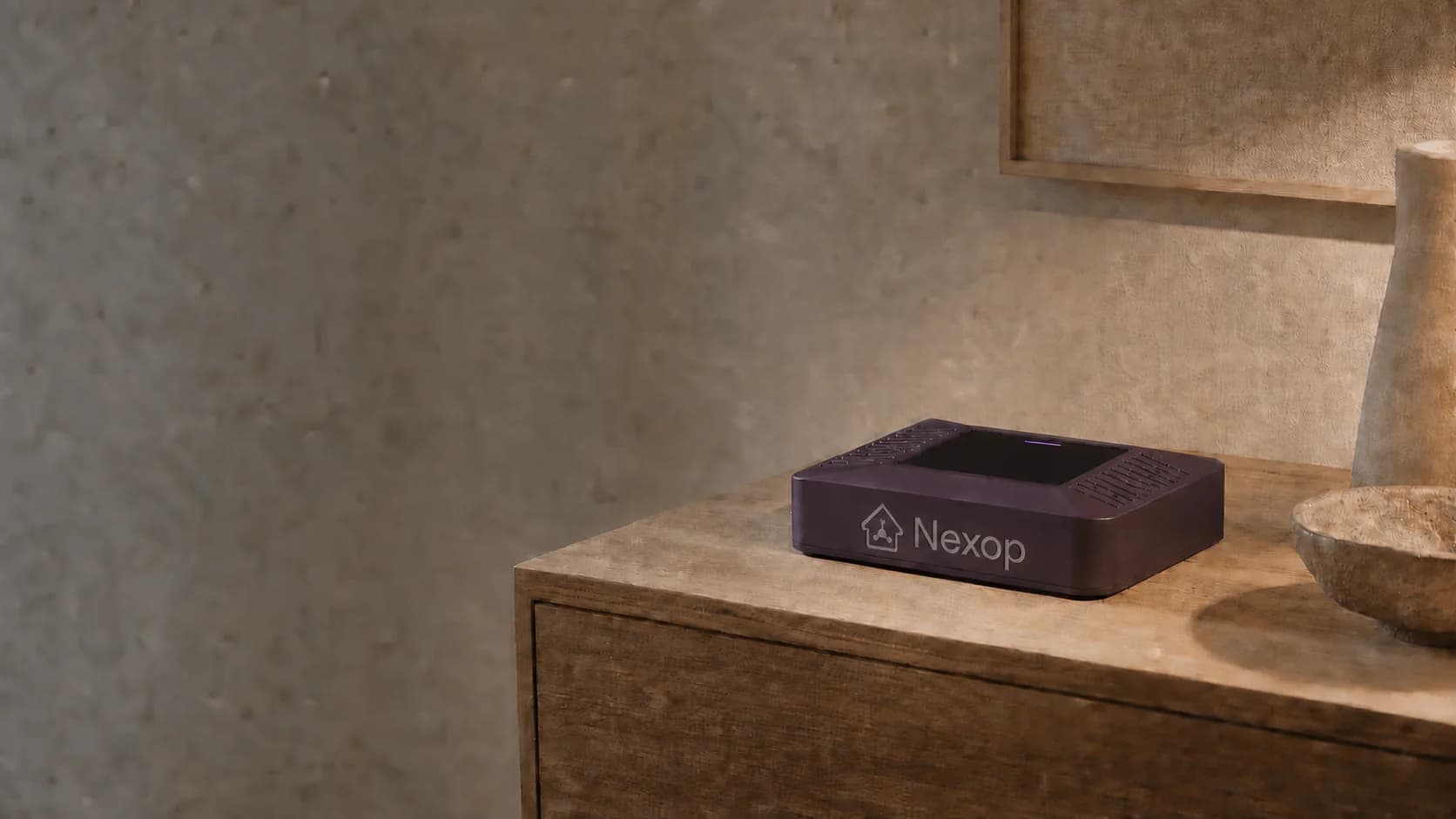
Smart homes were supposed to make daily life simpler. For a lot of people they became a collection of apps, bridges, accounts, cloud services and fragile routines that only work when every vendor is behaving.
That isn't intelligence. It's remote control with better packaging.
The problem with today's smart home
Most homes now have the ingredients for something useful: motion and door sensors, thermostats, lights, cameras, voice assistants, often a Home Assistant install already running. What's missing is the intelligence to tie them together.
You can automate individual actions, but the home rarely understands context. It doesn't know the difference between somebody waking up early, leaving for work, hosting guests, watching a film, or going to sleep.
So you end up with a home that can technically do a great deal and still needs constant human management.
The cloud is the wrong centre
A private home shouldn't have to send every habit to a remote server to become useful. A household's routines are sensitive. Wake times, presence, room activity, sleep patterns and device history say a lot about how people live.
Nexop is built on a different assumption: the home should learn locally. The intelligence should sit inside the house, close to the devices, and under the owner's control.
Curious whether Nexop fits your home?
Book a live demo, run by one of the founders rather than a salesperson. Or join the waitlist and hear from us the day it ships.
What we want Nexop to become
Nexop is a plug-and-play AI appliance for people who want a smarter home without surrendering the home itself.
It connects to the local smart home stack, observes routine patterns, and proposes automations you can approve, edit or ignore. It should feel less like programming rules and more like reviewing suggestions from something that understands the house.
Your home should adapt to you, rather than the other way around.
Why now
Local AI is finally good enough to run in a house, the smart home protocols are mature, and small hardware can carry the load. There's also an audience now for something that respects privacy without giving up intelligence.
So the pieces are here. What's left is putting them together in a way people can trust, which is the part we're working on. If that's something you want, book a demo, or read about the company behind Nexop.