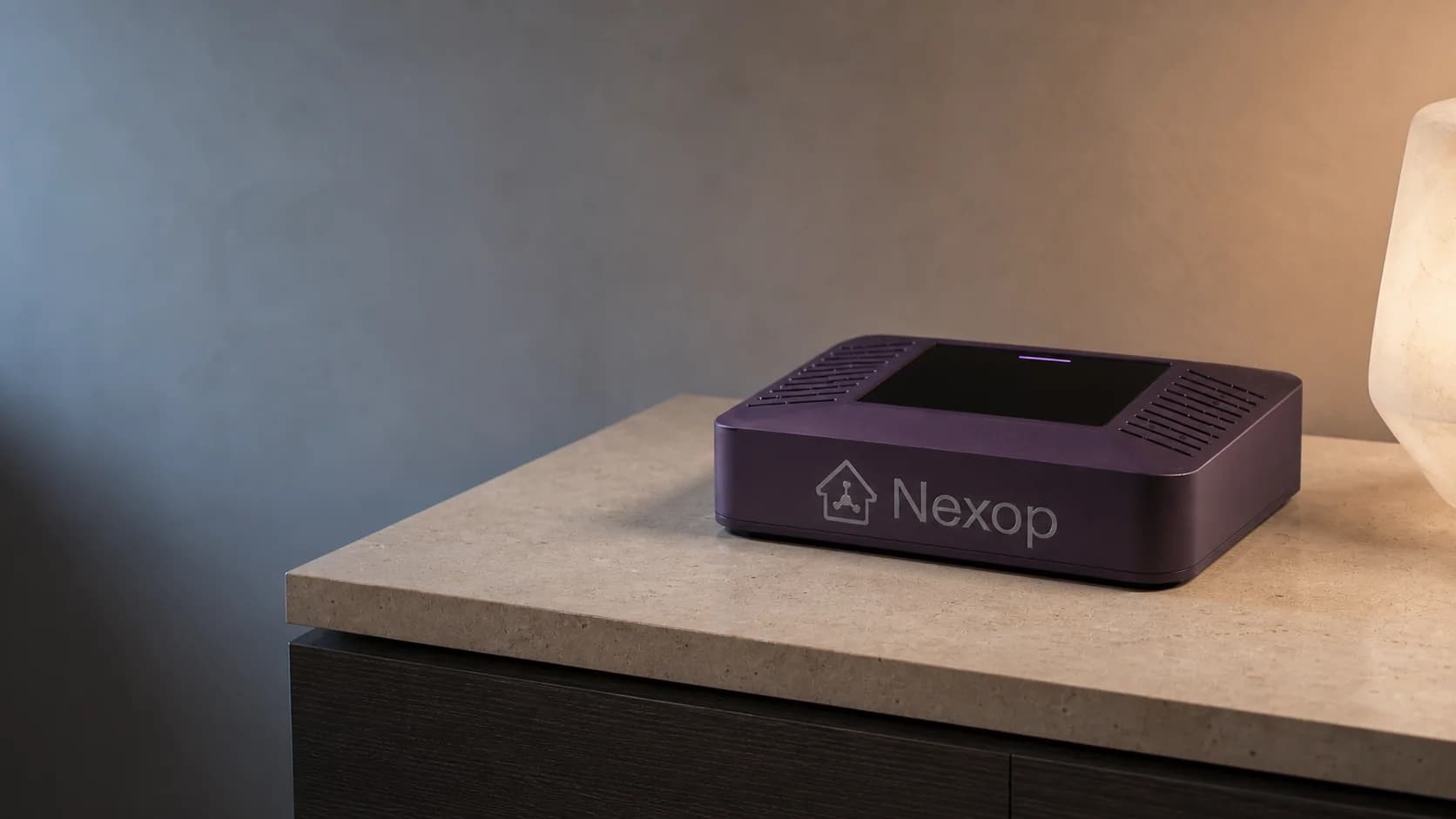
Most of the products Nexop competes with come from the United States or Western Europe. Amazon and Google are in California. Josh.ai is in Denver. Homey is Dutch. Home Assistant's commercial arm is in the Netherlands.
We're building from Singapore, and people ask about it often enough that it seems worth answering properly, including the parts that are harder.
Why here
The region isn't a follower market. Singapore has extremely high smart home penetration, dense apartment living, and a construction sector that wires buildings properly. Households here run genuinely mixed setups: KNX in newer condominiums, Zigbee sensors bought online, WiFi appliances from regional brands, and Matter arriving on top of all of it. That mix is what we build against every day, and it's a harder test than a home standardised on one ecosystem.
Climate makes automation matter more. In a place that's warm and humid year-round, climate control isn't seasonal. It runs constantly, and it's the largest line on the electricity bill. Getting cooling and dehumidification right based on actual occupancy is worth real money here, which sharpens what "useful automation" means. It's a different problem from optimising a heating schedule for a temperate winter.
Hardware supply chains are close. Manufacturing partners and component suppliers across Southeast Asia are a short flight away rather than an ocean and a large time difference. For a two-person company building a physical product, that proximity isn't a small advantage.
And it's a serious place to run a company: straightforward incorporation, reliable rule of law, and a government that takes technology infrastructure seriously. Unremarkable to live with, and useful when you're small.
Curious whether Nexop fits your home?
Book a live demo, run by one of the founders rather than a salesperson. Or join the waitlist and hear from us the day it ships.
What's harder
An honest post has to include this part.
We're distant from the loudest market. Much of the smart home conversation happens in American tech media and American time zones. We aren't in the room by default, and being organic-only means we can't buy our way in either.
There's no local peer group for this specific thing. Singapore has excellent fintech, logistics and enterprise software communities. Consumer smart home hardware is thin. There's nobody nearby who has already made our mistakes.
Consumer hardware is unfashionable with investors: long timelines, inventory risk, thin margins compared with software. We're bootstrapped, which is partly a choice and partly a reflection of that.
But smallness is the real constraint. Two full-time founders against companies with hundreds of engineers. We can't out-build Amazon on voice recognition or Homey on radio protocols, and we've said so publicly, because pretending otherwise would fool nobody who knows the market.
What being small does allow is choosing a narrow problem and refusing to compromise on it. Local-first processing is inconvenient. Voice, remote access and updates are all harder without a server in the middle. A larger company with a cloud business would have talked itself out of it. We don't have that pressure.
Why "designed and built in Singapore" is on the site
It isn't decoration, and it isn't a nationalist point. It's a claim about accountability.
A local-first product asks for unusual trust. It observes your household continuously, and the entire argument for why that's acceptable rests on the processing staying inside your building. That claim is worth more when you can see who's making it. Both founders are named, both are reachable, and the company has a registered address rather than a support form.
If Nexop ever stops being local-first, there will be two identifiable people who broke their word about it. That's deliberate.
Where we actually are
We're pre-launch. No customer numbers, no testimonials, no launch date, because we don't have one, and inventing one to seem further along would be the first small dishonesty in a product whose entire pitch is trustworthiness.
What exists is a working system we demonstrate on a real home, a clear position on how it should behave, and the reasoning behind it written out where it can be argued with.
If you want to see it, book a demo. One of us runs it, not a salesperson. If you'd rather wait, join the launch list and you'll hear when there's something real to hear about.